And then? And then Mullvad was censored in the UK. Watch the banned ads here.
The United Kingdom is escalating its censorship and mass surveillance. When Mullvad tried to address this with the TV ad “And Then?”, it was banned on British television. The outdoor ad campaign meant to criticise the TV ban was also largely halted. Here, you can watch the banned ads and explore the entire campaign.
British politicians and authorities are working intensively to escalate censorship and mass surveillance. In just the past year alone, they have attempted to force Apple to (secretly) install backdoors in its end-to-end encrypted cloud service; censorship has been introduced in line with the Online Safety Act, which upon its implementation directly resulted in political material being blocked while access to Wikipedia was put under threat; proposals have been made for an amendment to the Children’s Wellbeing and Schools Bill that would result in client-side scanning and government spyware on all UK phones; in April, Ofcom is expected to issue guidelines on whether Section 121 of the Online Safety Act should include total surveillance through client-side scanning or not; and right now, the House of Lords has sent an amendment to the House of Commons, which later this year will decide whether VPNs should be required for identity verification or not. In February 2026, the government also announced plans to fast-track legislation requiring identity verification for VPN use.
These are just some of the current trends pointing in a highly authoritarian direction in the UK. To draw attention to the slippery slope of both censorship and mass surveillance, and the absurdity of warrantless surveillance, Mullvad created the commercial “And Then?”, a short film directed by Jonas Åkerlund. It has been used to criticise the EU Chat Control proposal and has aired as a TV ad (in different versions) on, for example, the largest television channels in Germany and Sweden. It has also been broadcast on American TV channels to criticise mass surveillance in the US. In the United Kingdom, however, the campaign was completely halted.
Mullvad was banned on TV. And then?
When we wanted to make our voice heard and criticise mass surveillance in the UK, Mullvad was rejected by Clearcast, the organization responsible for approving all TV ads in the UK and ensuring they comply with the rules set by the authorities (“we don’t write the rules – we just make sure they’re followed”, as stated on their website). The arguments were many, but among other things they wrote:
- “The overall concept lacks clarity.”
- “It is unclear why certain examples are included, who the ‘speaker’ represents, and the role of individuals depicted in the car.”
- “Several examples (e.g., paedophiles, rapists, murderers) risk causing serious offence and could imply that the VPN facilitates criminal activity.”
- “Referencing topics such as: Paedophiles, Rapists, Murderers, Enemies of the state, Journalists, Refugees, Controversial opinions, People’s bedrooms, Police officers, Children’s headsets … is inappropriate and irrelevant to the average consumer’s experience with a VPN.”
We think this is deeply concerning, Kafkaesque and Orwellian. In the UK, we are facing a situation where mass surveillance and censorship reminiscent of authoritarian countries are on the verge of being introduced; and when we attempt to criticise this, we are stopped on very vague grounds. In a society with an open and healthy debate culture, you don’t get caught up in “clarity”, “irrelevance”, or assumptions, but take the overall message into account (we think our message is obvious) and allow viewers to think for themselves and form their own opinions.
Here, we bring you the ads that were too much for British television:
And then? And then Mullvad went underground.
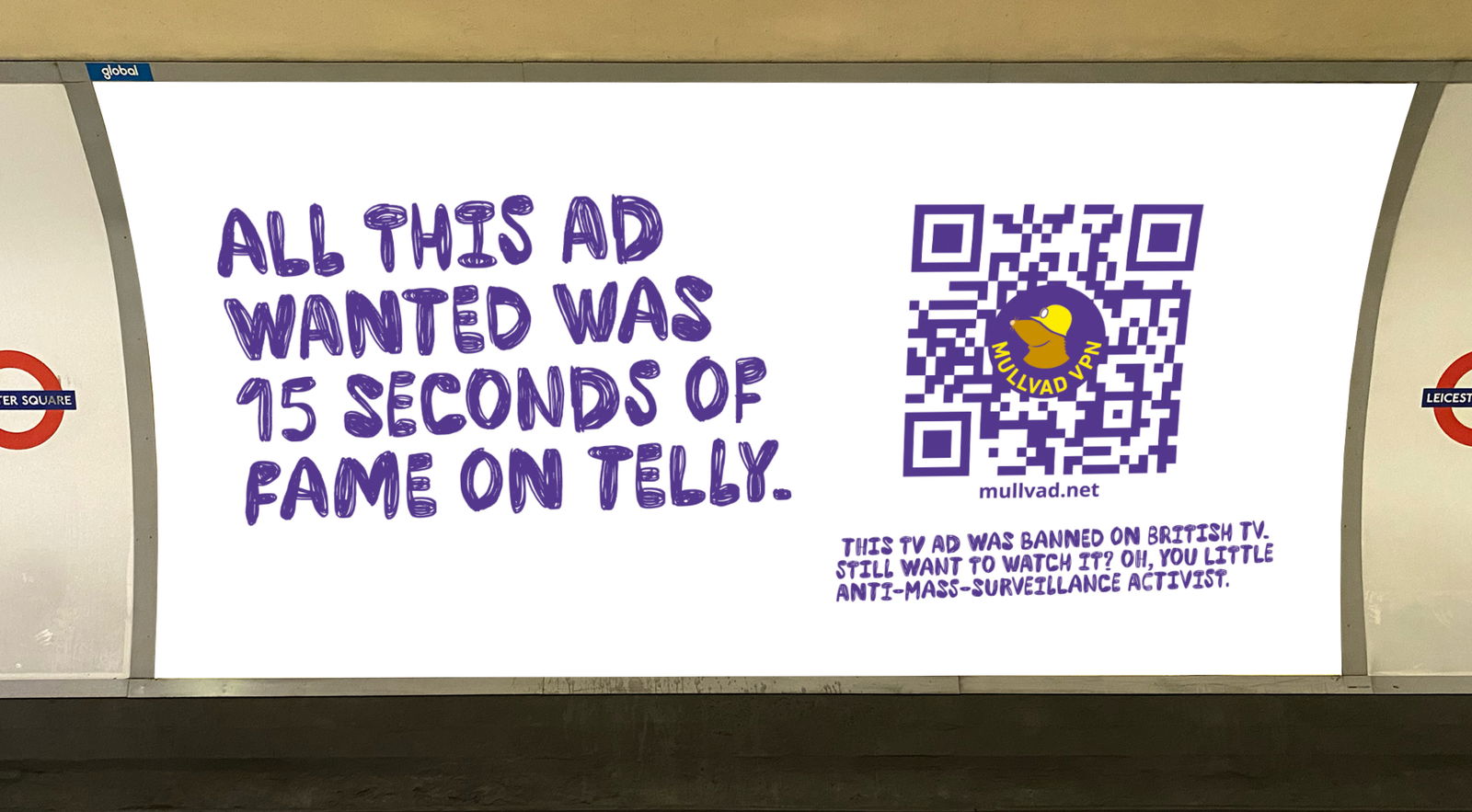
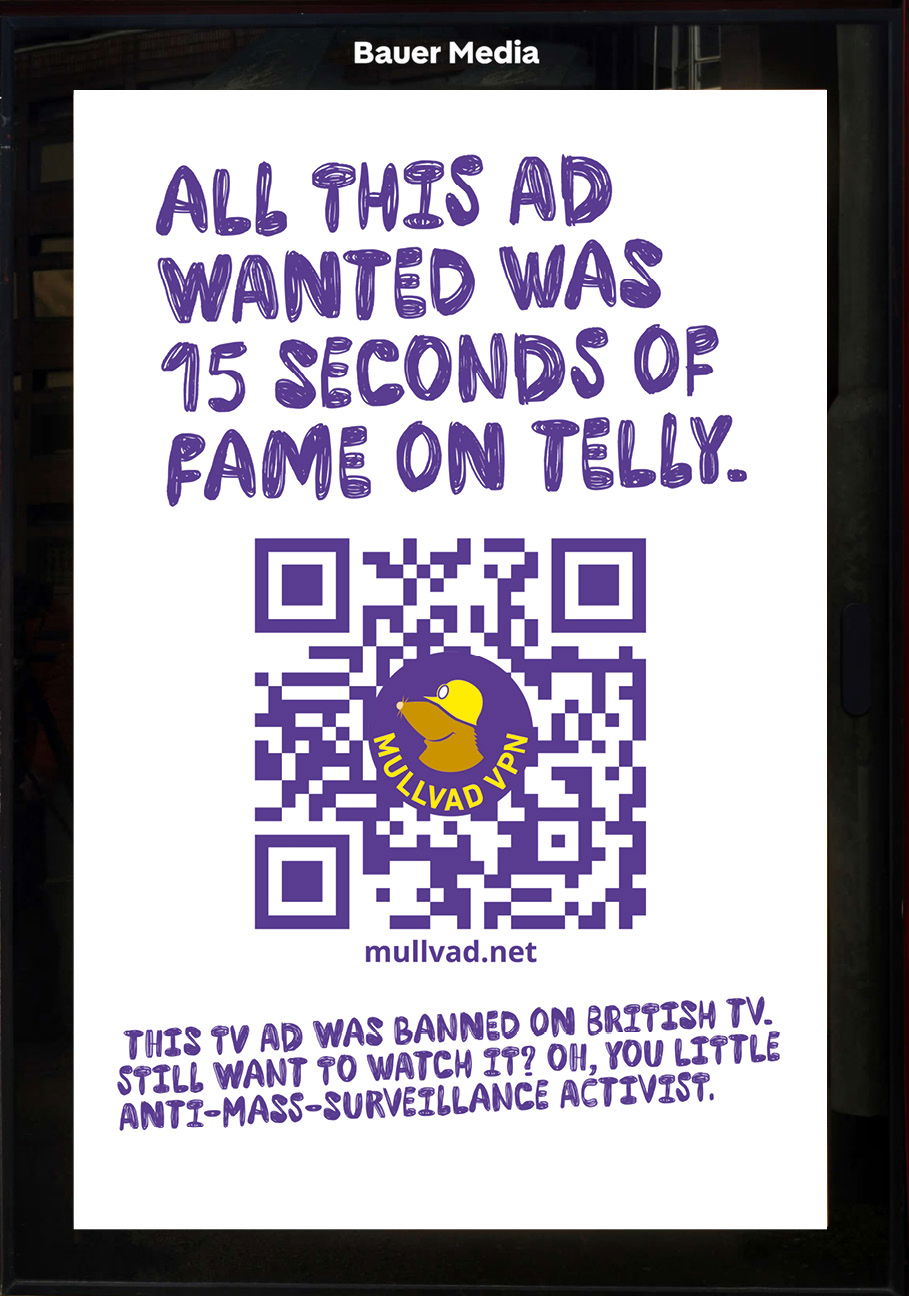
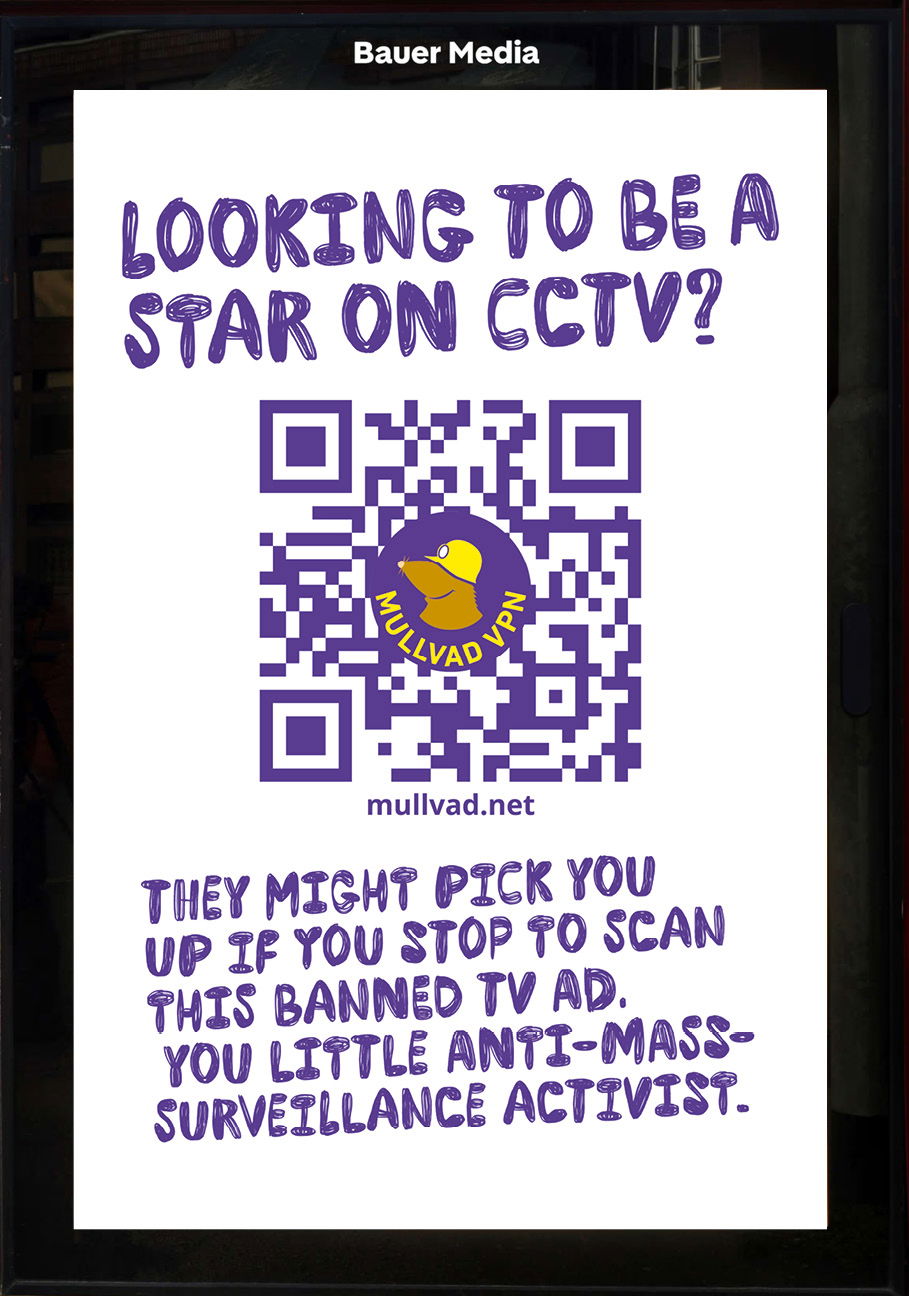
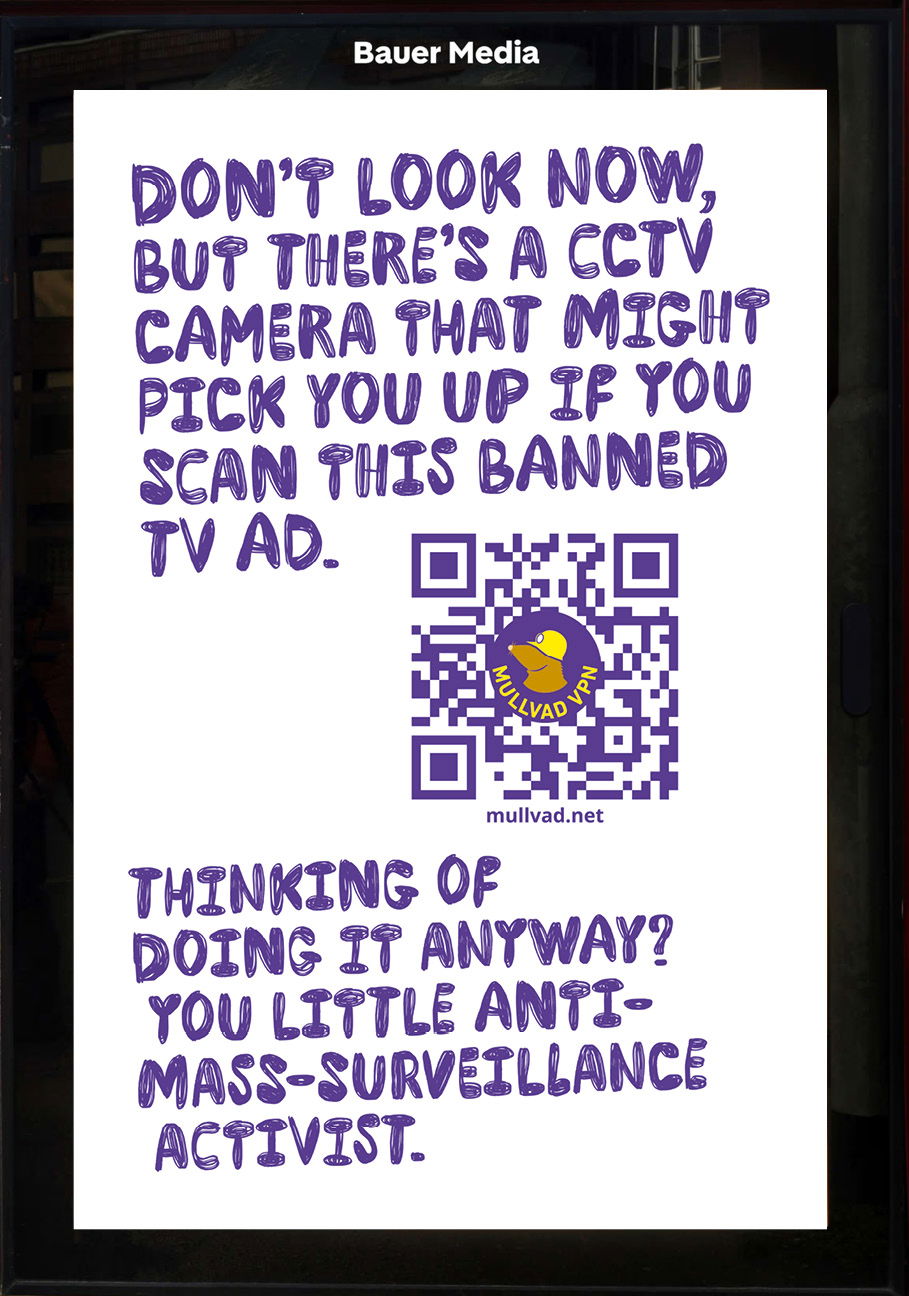
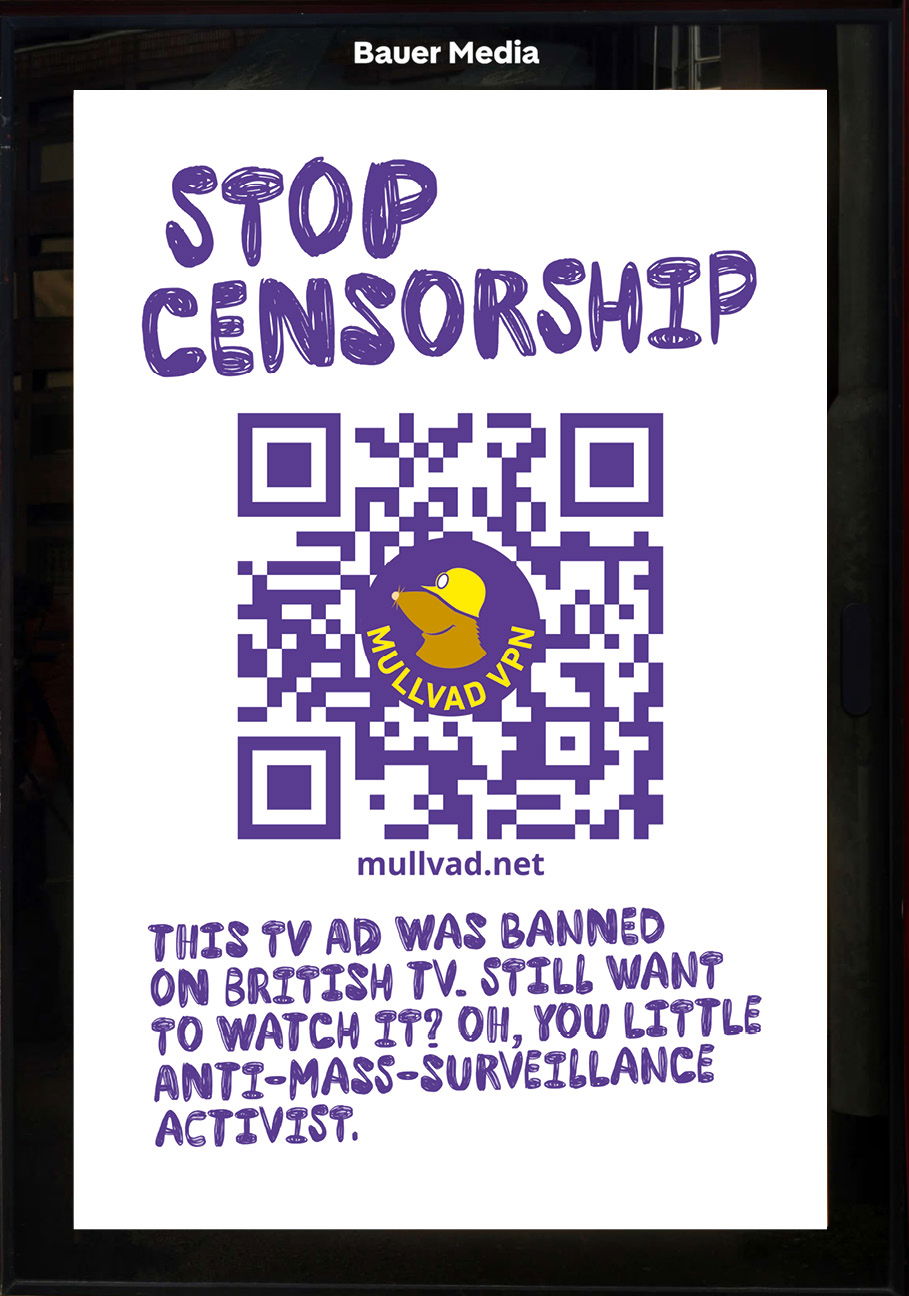
When we were banned from British television, we chose to go underground (natural Mullvad thing to do). Our first idea was to spread a QR code that led to the commercial, but this was also opposed, by the government body Transport for London (TFL). The argument was clear: you cannot encourage people to engage with a banned TV commercial. This is one of the banned underground ads.
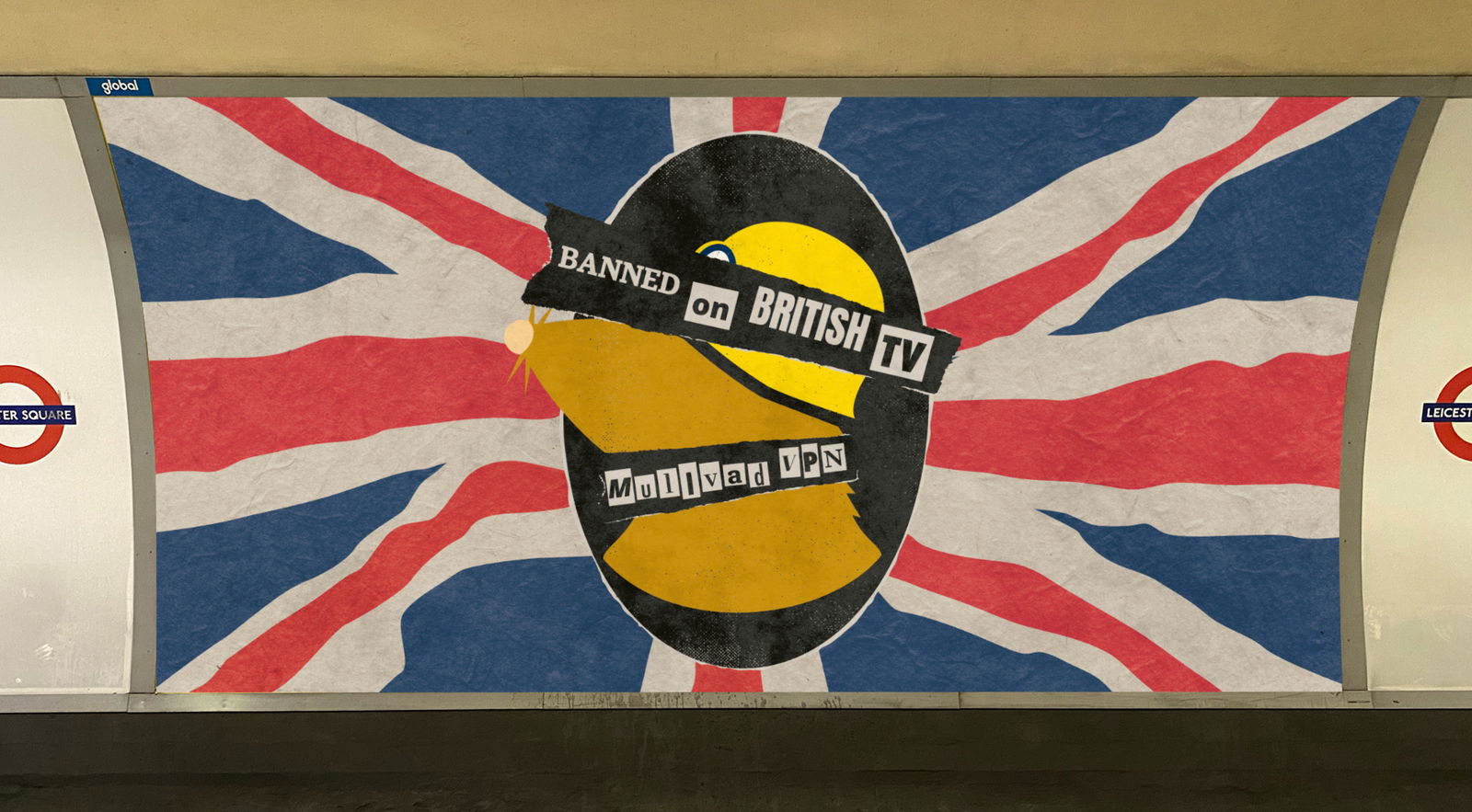
And then? God save the Mullvad ads.
When QR codes and copy didn’t get approved, we tried a slightly more graphic alternative. That didn’t pass either.
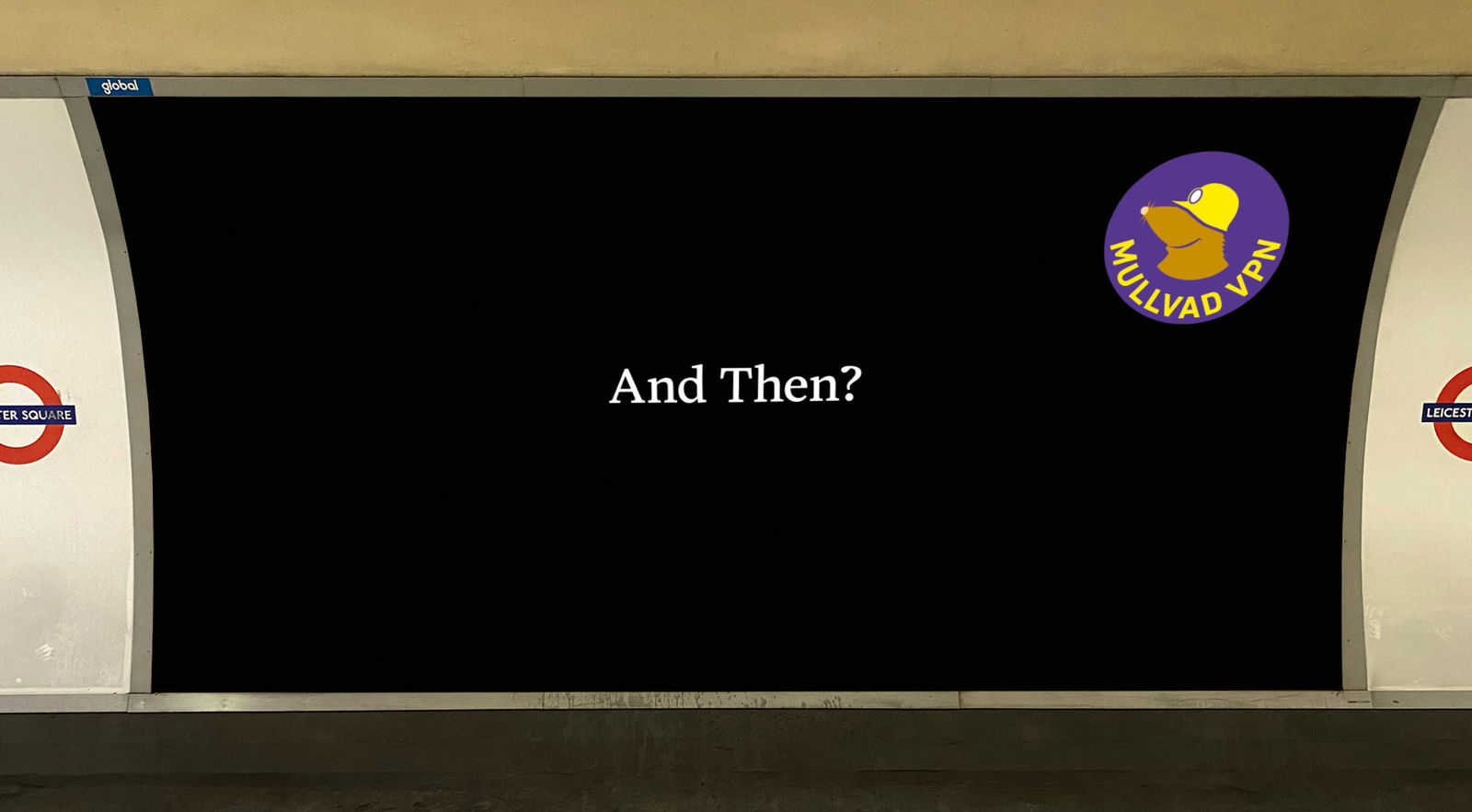
And then?
In the end, we chose to simply run the message “And Then?” (the only thing we were forced to change was the color, from white to black and yellow) as a relevant question for underground commuters in a nation sliding down the slippery slope of mass surveillance and censorship.
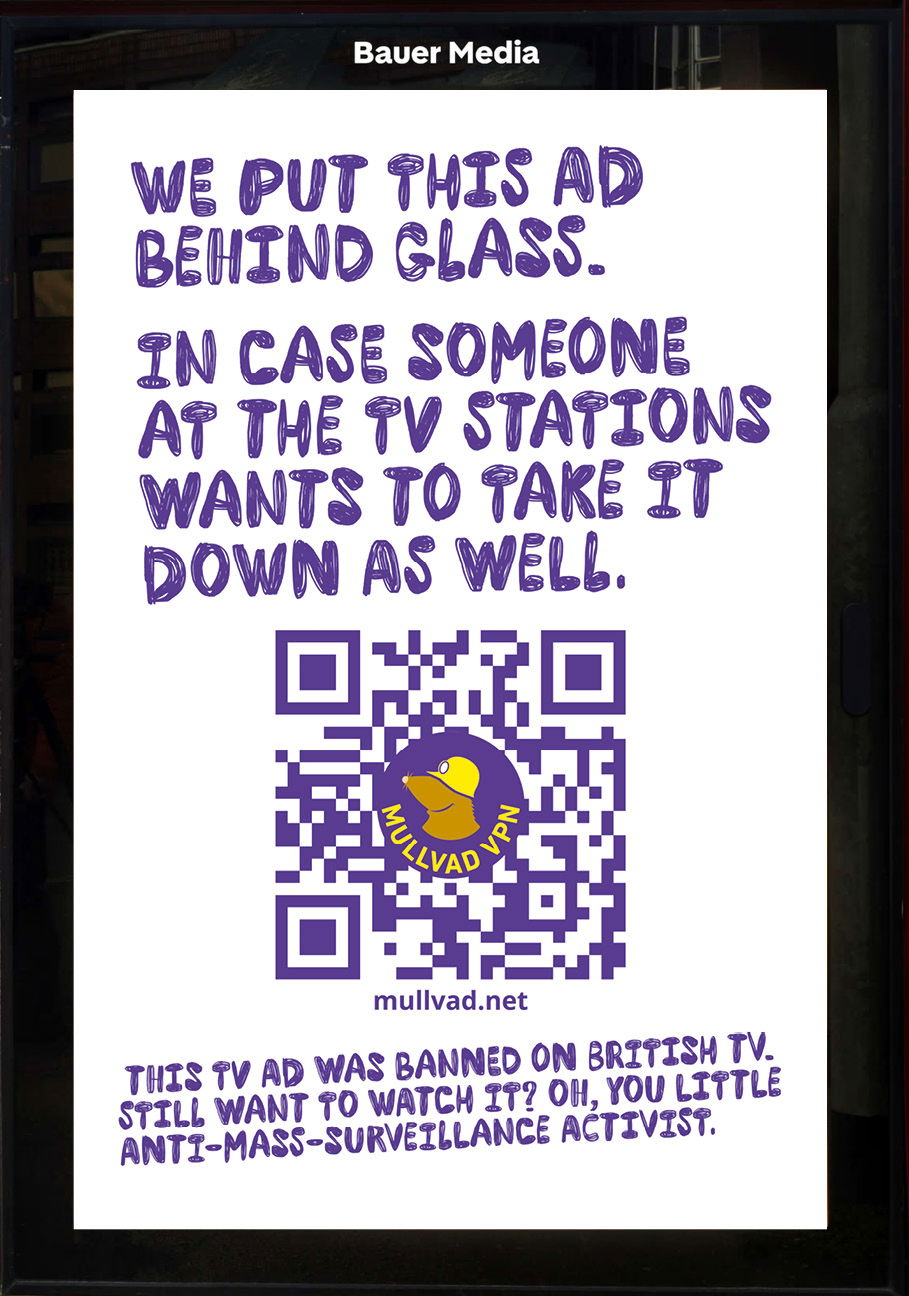
And then? And then we hit the streets.
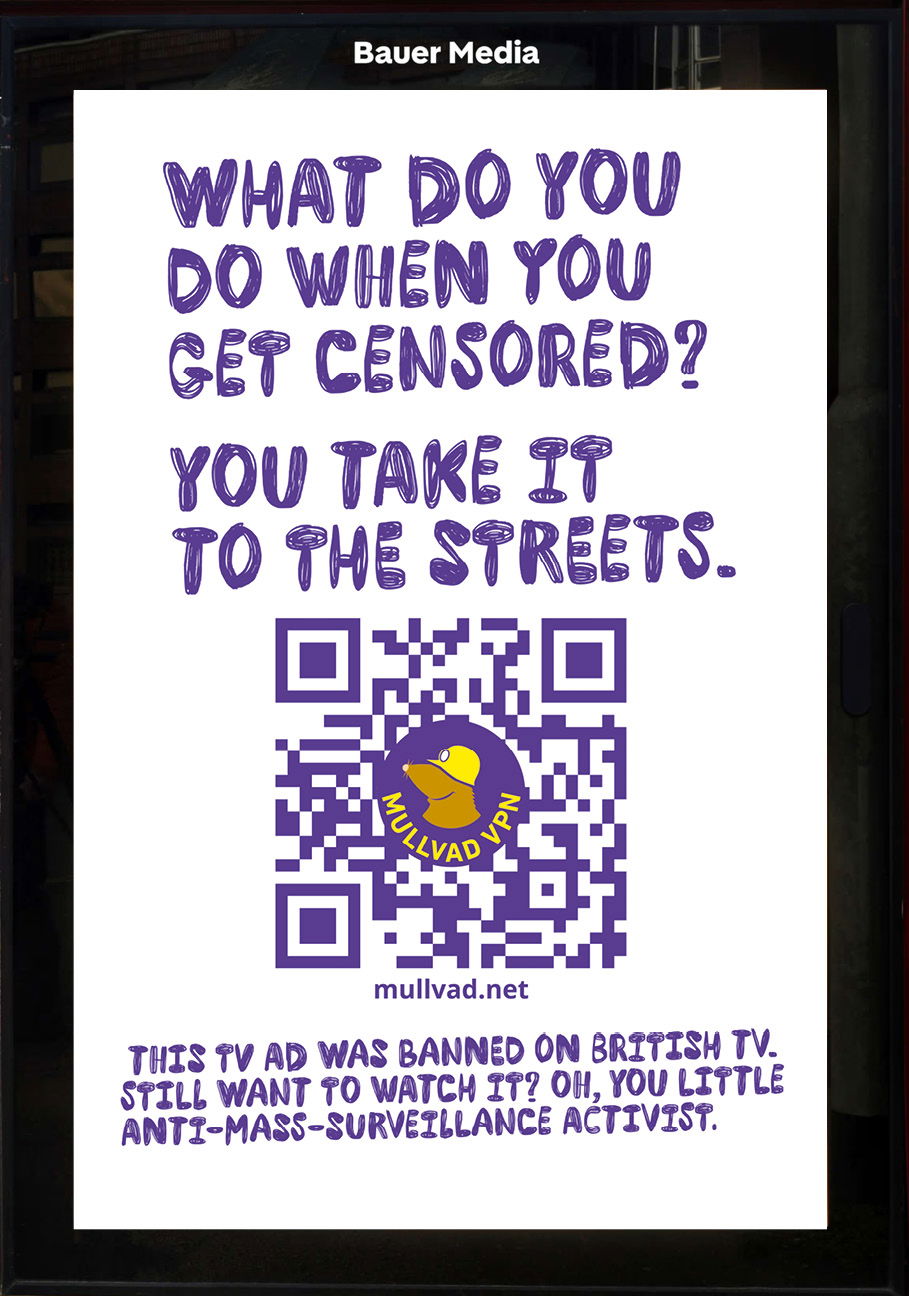
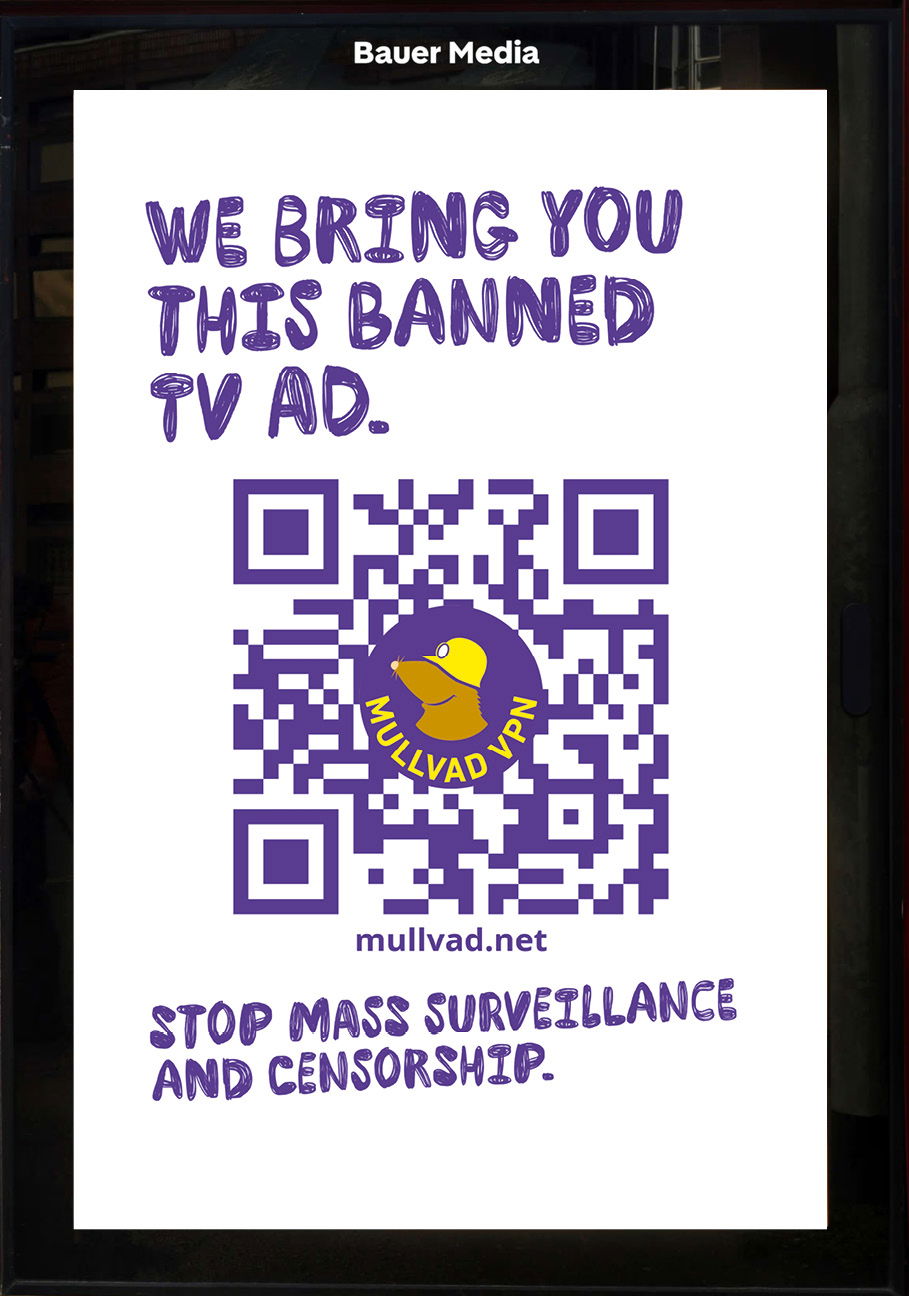
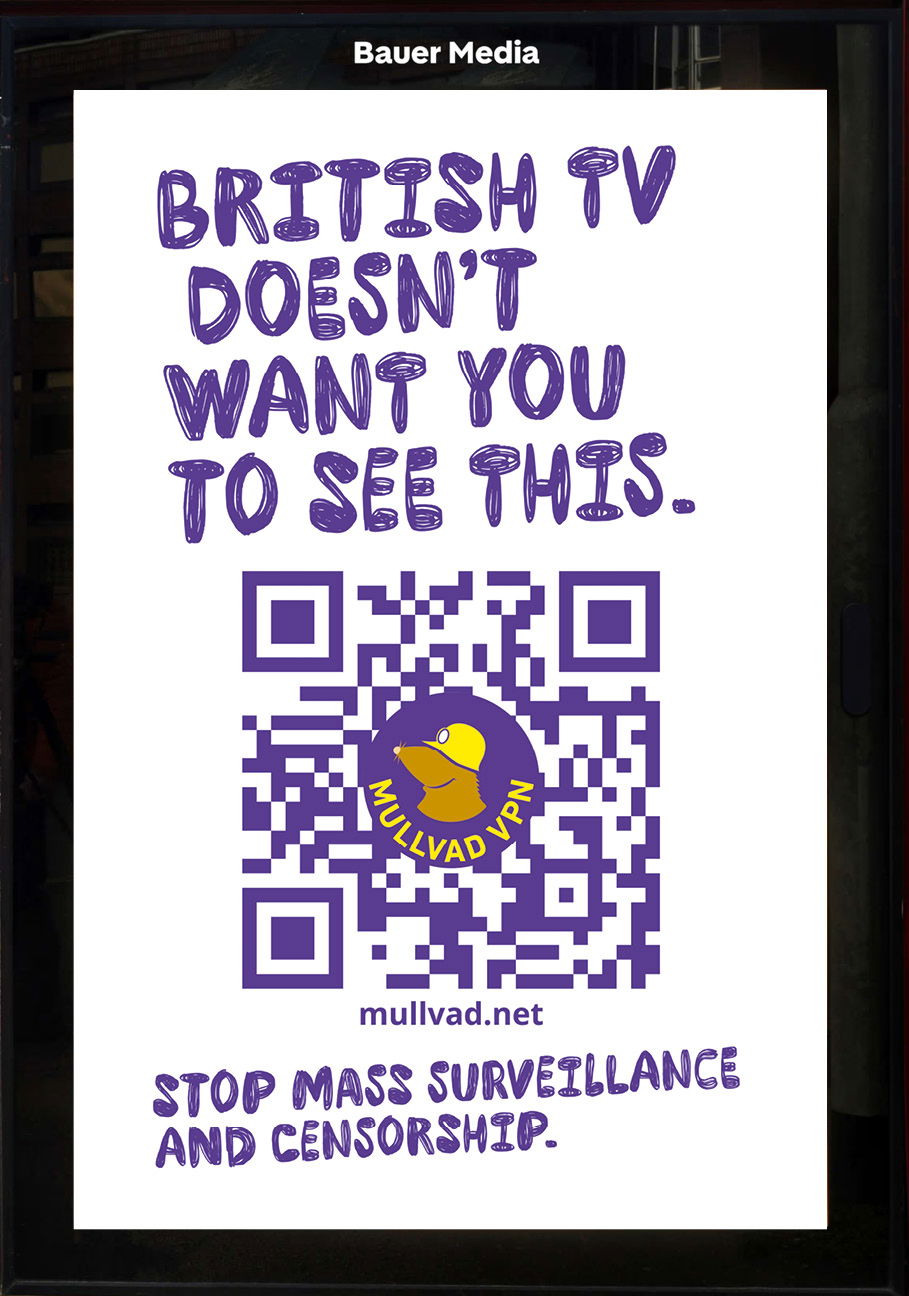
After running into difficulties underground, we chose to go overground with these units. Incredibly, we didn’t encounter any resistance. So far.
And then? Outdoor cinema.
We wanted to make an impact with large-scale billboards. First, we tried to run the God Save the Queen unit, but The City of London rejected it. So, during the day, we repeated our message “And Then?”. And then, at night, we turned the nearly empty advertising space into a cinema screen. We also hit the streets to project the banned TV ad onto several walls in London, to bring it to the people when British TV said no.